
As demand for safe and high-quality agricultural products continues to rise, the vegetable supply chain faces greater pressure to deliver freshness, transparency, and efficiency. Vegetables have a short shelf life, making freshness management one of the biggest challenges for farmers, processors, logistics companies, and retailers. This is why RFID technology—especially RFID tracking stickers—has become an important tool for improving traceability and maintaining freshness across all stages of the supply chain. By enabling accurate data collection and automated tracking, RFID helps businesses manage vegetables more efficiently and ensures consumers receive fresher products.
Before diving into how RFID works, it is essential to recognize the difficulties within the vegetable supply chain. At the production stage, information like planting records, pesticide use, and harvest dates is often not transmitted accurately to the next stage. In processing, manual recording leads to errors and makes it hard to maintain consistent batch information. During storage, vegetables require strict temperature control, yet traditional inventory management lacks real-time visibility. Transportation presents even more challenges, as delays or poor cold-chain conditions can directly impact freshness. Finally, retail stores struggle with shelf-life monitoring and loss caused by expired products.
Because of these issues, suppliers need a smarter and more reliable tool to manage freshness. This is where RFID tracking stickers provide real value.
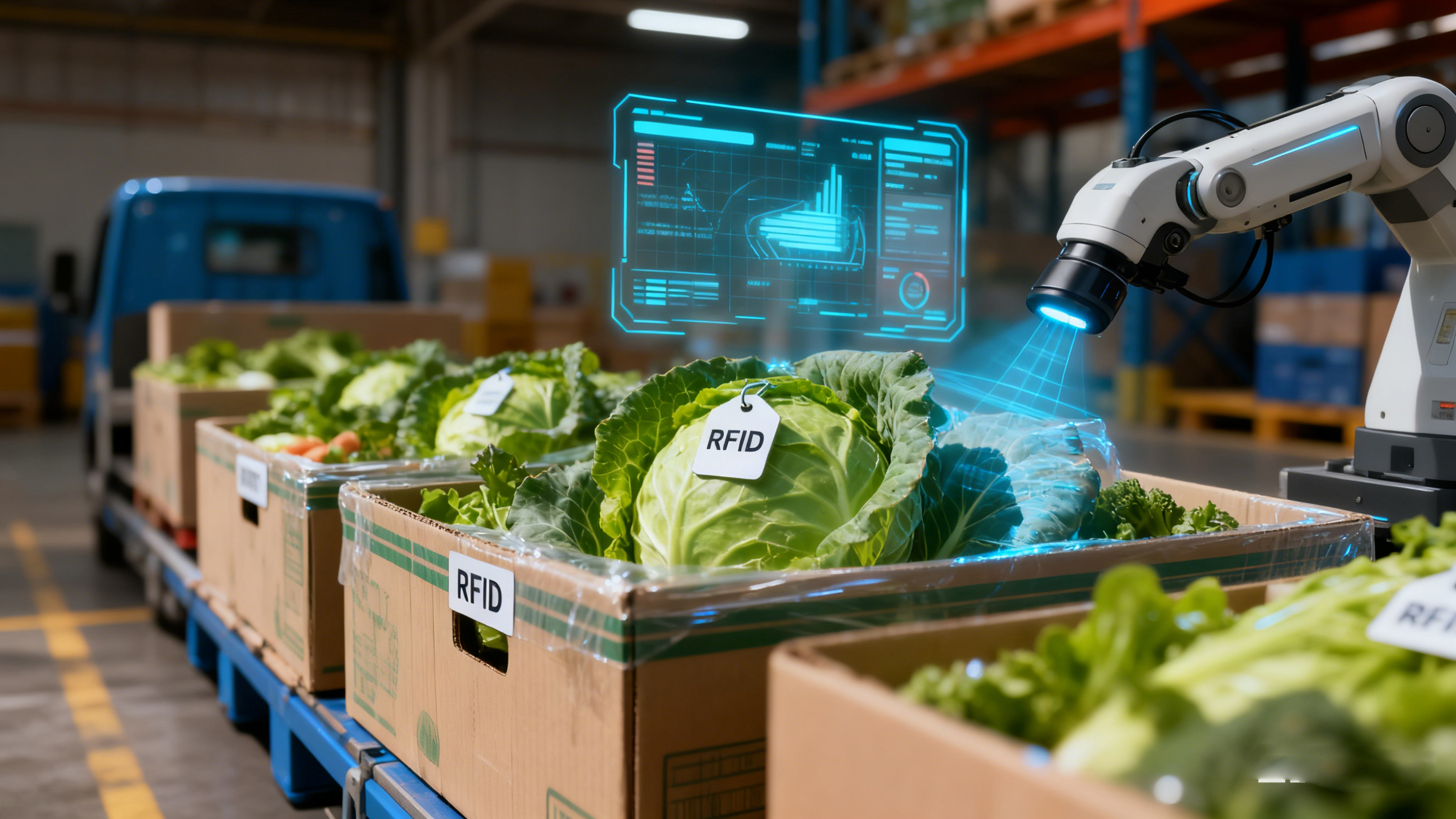
To begin with, RFID helps address the information gap at the source. Each batch of vegetables can be assigned an RFID tag with a unique ID. This tag may contain key data such as vegetable type, planting date, fertilizer usage, pesticide records, and harvest time. As a result, when vegetables leave the fields and enter the supply chain, they are already equipped with complete production information.
This structured data supports more efficient management at farms and ensures that downstream enterprises receive accurate information. Buyers can quickly confirm whether vegetables meet safety standards, while consumers can later view production details, increasing confidence in food safety. In this way, RFID establishes a foundation for fresh produce traceability right at the source.
Moving from production to processing, RFID continues to play a vital role. When vegetables arrive at a processing facility, workers can scan the RFID tags to read planting records and add new data such as the processing unit, processing time, washing procedures, additives, and packaging information. This means the tags carry updated and complete information covering both production and processing phases.
Such transparent data not only improves the operational accuracy of processing lines but also ensures full traceability in the event of a food safety issue. If a problem occurs, regulatory agencies can use the RFID tag information to trace the issue back to a specific farm or processing batch, allowing timely action and reducing losses.
Vegetables are seasonal products with strict storage requirements, so precise inventory control is critical. RFID tracking stickers greatly improve warehouse management by making storage data digital. Before vegetables enter the warehouse, RFID readers automatically scan their tags. The warehouse system then suggests the appropriate storage zone, shelf, and location.
During inventory checks, workers can simply use handheld devices to read the RFID tags. This enables real-time updates of stock information, significantly improving efficiency and accuracy. Moreover, because RFID reduces manual involvement, it also minimizes errors during stock movement. Once products leave the warehouse, the system automatically updates inventory data, supporting a stable and well-organized storage process.
As vegetables travel from storage to retail, maintaining freshness depends on accurate monitoring and timely delivery. RFID combined with GPS can track goods throughout the transportation process. Logistics companies can view the real-time status of each shipment, ensuring that vegetables arrive on time and in good condition.
At customs or checkpoints, RFID technology allows officers to read tag data instantly, eliminating the need to open packages. This speeds up inspection and reduces delays, which helps preserve freshness by shortening the time vegetables spend in transit.
Finally, in the retail environment, RFID technology provides support for freshness control and theft prevention. Stores can use RFID to track shelf life and receive automatic alerts when products approach expiration. This allows staff to take action, such as discounting items or adjusting display strategy, ensuring customers always receive the freshest vegetables possible.
RFID tags also help retailers detect unauthorized removal of goods, improving loss prevention. At the same time, retailers can access a complete product history through RFID data, from planting and processing to storage and transport. This strengthens quality control and enhances the consumer shopping experience by offering transparent product information.
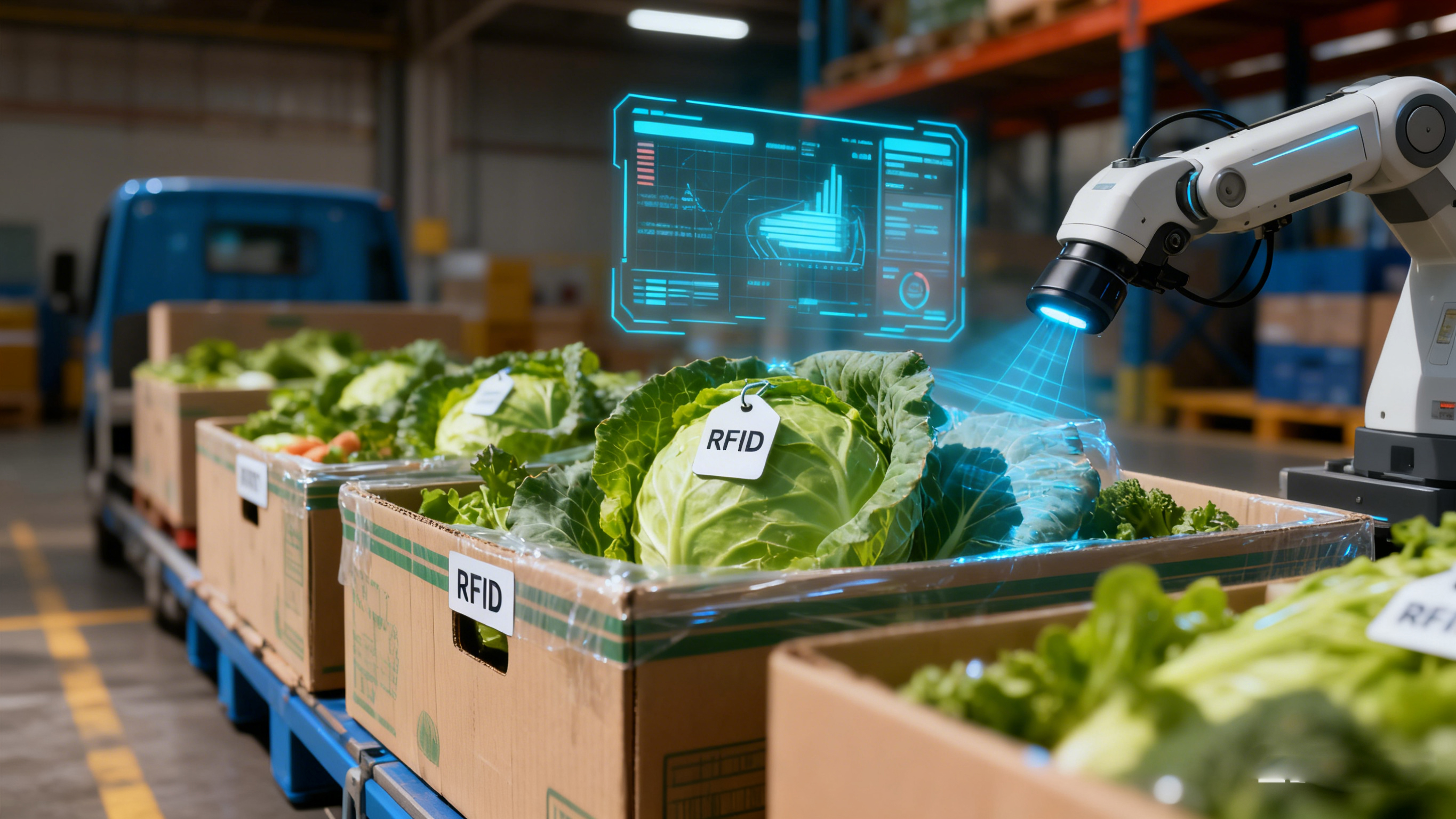
By connecting data across all steps—from farm to store—RFID tracking stickers help transform vegetable freshness management into a measurable, controllable process. The benefits include:
Better visibility and traceability
Higher inventory accuracy
Reduced spoilage and waste
More efficient logistics
Improved consumer trust
Compliance with food safety regulations
With RFID, every batch of vegetables has a digital identity that follows it throughout the supply chain. This allows companies to make smarter decisions and maintain higher product quality in a competitive market.
RFID tracking stickers provide a reliable, efficient, and practical way to track freshness in the vegetable supply chain. They help suppliers improve transparency, optimize inventory, reduce losses, and offer safer, fresher produce to consumers. As demand for food safety and traceability grows, RFID will continue to be a key technology for modern agriculture and fresh food logistics.
If your business is looking for advanced RFID labels or a complete fresh-supply-chain tracking solution, ZD Technology offers professional RFID products and system integration services to help you build a smarter and more secure supply chain.
Do you need a professional team to provide you with solutions? Contact us for a quote
Let us discuss it with you.


 Tel: +86-755-23080267
 Email: [email protected]
Add: A316,building A, Huayuan Technology And Innovation Park, Baoyuan Road
Copyright © 2024 Shenzhen ZD Technology Co., Ltd., All rights reserved.
Designed by 

