
Wildlife protection has become increasingly important as endangered species face rising threats from habitat loss, illegal hunting, and climate change. At the same time, livestock health management also requires reliable identification and monitoring tools. To address these challenges, modern technologies such as IoT and automatic identification systems are being adopted worldwide. Among them, RFID animal tracking has become one of the most practical and effective solutions. By offering accurate identification and efficient data collection, RFID supports wildlife conservation programs and improves livestock management.
To understand why RFID plays such a key role, it is helpful to look at how the technology works. RFID uses radio waves to identify tagged objects or animals automatically. An RFID system consists of three main parts: the RFID tag, the reader, and the antenna. When an animal with an RFID tag enters the reader’s range, the tag sends its encoded data, such as identification number or health information, to the system.
Compared with other tracking tools like GPS or satellite devices, RFID is simpler, lighter, and more cost-effective. While GPS focuses on location tracking across large distances, RFID animal tracking is mainly used for identification, behavior monitoring, and health data management. RFID tags come in different forms, such as ear tags, collars, or implanted microchips, making them suitable for many species. With this basic understanding, it becomes clearer why RFID is becoming widely used in wildlife conservation programs.
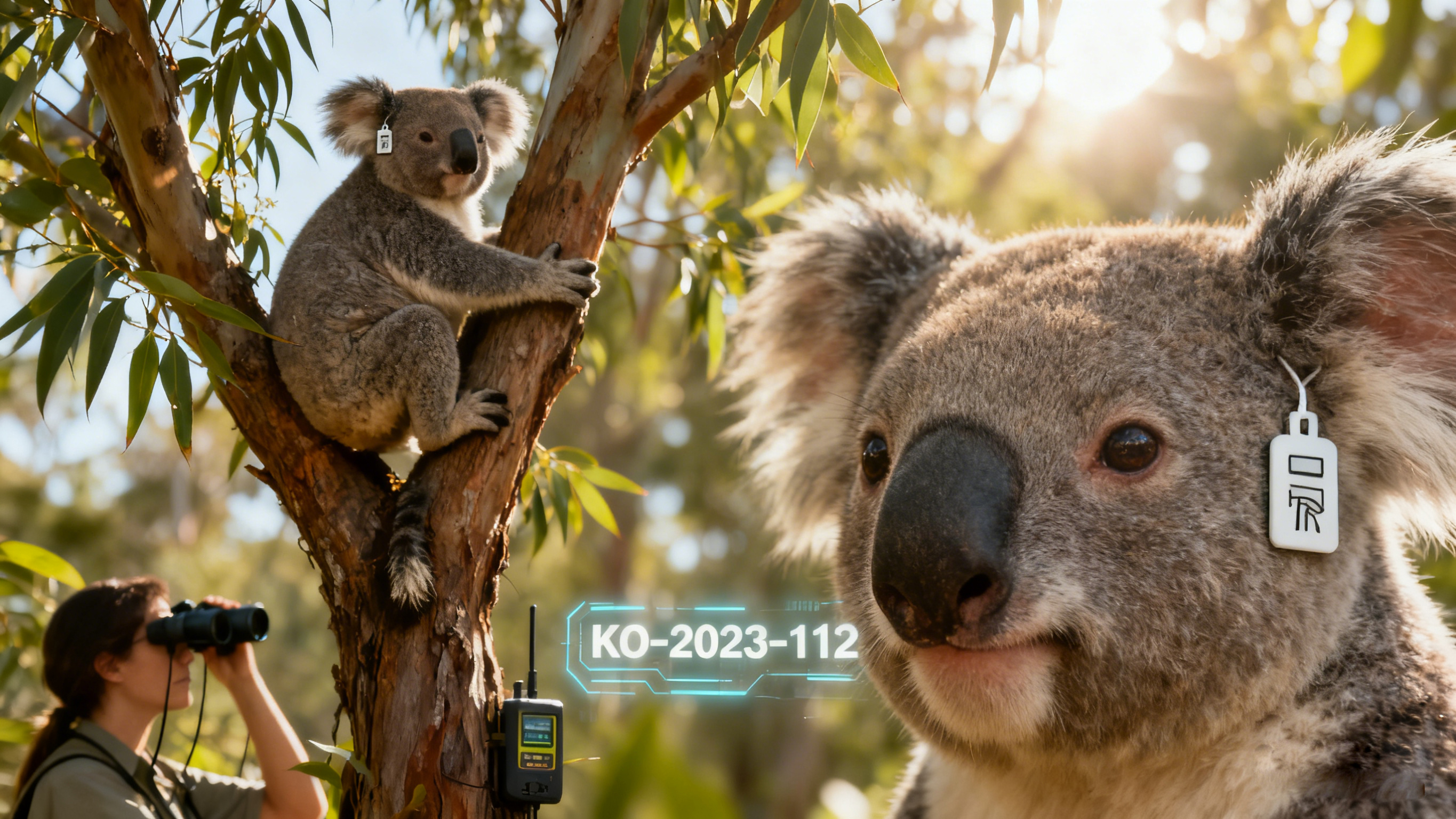
One major application of RFID is in monitoring endangered animals. Conservation teams use RFID tags on large species such as elephants, bears, or koalas to collect long-term movement and behavior data. This information helps reserve managers better understand habitat use and adjust protection strategies. RFID also plays a role in anti-poaching efforts because unique ID codes allow fast verification of animals and reduce illegal activities.
Another important application is livestock identification and health management. Farmers use RFID ear tags to store individual animal data, including age, vaccination records, breeding information, and health conditions. This improves farm efficiency, reduces disease spread, and ensures traceability in the food supply chain.
RFID also supports scientific research. Researchers use tags to track animal movement patterns, feeding behavior, and breeding activities. With reliable long-term data, conservation organizations can create more accurate wildlife management plans.
In addition, combining RFID with IoT systems allows the development of smart ecosystems. Some wildlife reserves have already deployed multi-sensor networks that monitor both animals and environmental changes. For example, certain conservation areas use RFID readers together with environmental sensors to detect unusual patterns. These digital tools help conservation teams react quickly to potential risks.
One of the biggest advantages of RFID is that it is non-intrusive and safe for animals. The tags are small and lightweight, whether attached as collars, ear tags, or implants. They do not harm animals or disrupt their natural behavior, which is essential in wildlife conservation.
Durability is another key benefit. Many RFID tags are designed for harsh outdoor environments. They can withstand rain, humidity, extreme heat, and strong sunlight. This makes them suitable for long-term wildlife monitoring or livestock tracking in open fields.
Cost-effectiveness is also an important factor. Compared to GPS collars or satellite-based tools, RFID tags are far more affordable, especially for large-scale projects. This allows conservation groups and farms to deploy RFID systems without excessive budgets.
Accuracy and efficiency are major strengths as well. RFID tags carry unique identification codes, ensuring that each animal can be identified quickly and correctly. Since RFID reading does not require direct contact, staff can collect data more efficiently during daily operations. This reduces stress for both animals and workers.
RFID also supports rich data collection. Tags can store important information, such as health status, age, or breeding history. When paired with management software, this creates a complete digital record for each animal.
Finally, RFID works well with IoT networks. When installed together with sensors or remote monitoring devices, RFID makes it possible to create a real-time, smart wildlife management system. This enhances environmental protection and supports data-driven decision-making.
Although RFID offers many advantages, there are also challenges to consider. The reading range of passive RFID tags is shorter than that of active tags, so selecting the right type of tag is important. Different species also require different tagging methods to ensure safety and durability. In addition, data management systems must be properly maintained to handle large volumes of information.
Despite these challenges, RFID remains one of the most practical and balanced technologies for animal tracking due to its reliability, low cost, and flexibility.
In summary, RFID animal tracking supports wildlife protection, livestock management, and scientific research by providing accurate, long-term, and non-intrusive identification. It improves conservation efficiency, supports data-driven decisions, and enhances the ability to protect endangered species. As digital ecosystems continue to develop, RFID will remain a key technology in future wildlife conservation efforts.
ZD Technology, as a professional RFID tag manufacturer, provides durable and reliable RFID tags and customized solutions for animal tracking and wildlife monitoring. If you are looking for high-quality RFID products for conservation projects or livestock management, ZD Technology is ready to support your needs.
Do you need a professional team to provide you with solutions? Contact us for a quote
Let us discuss it with you.


 Tel: +86-755-23080267
 Email: [email protected]
Add: A316,building A, Huayuan Technology And Innovation Park, Baoyuan Road
Copyright © 2024 Shenzhen ZD Technology Co., Ltd., All rights reserved.
Designed by 

