
Managing chemical logistics requires absolute precision in both regulatory compliance and physical durability. For chemical plant managers and compliance officers, standard tracking labels often fail due to localized solvent exposure or electromagnetic interference from steel drums. This technical guide outlines how selecting substrate-matched UHF Labels and engineered RFID On Metal Tags allows you to preserve critical GHS data integrity and maintain seamless traceability throughout your industrial supply chain.
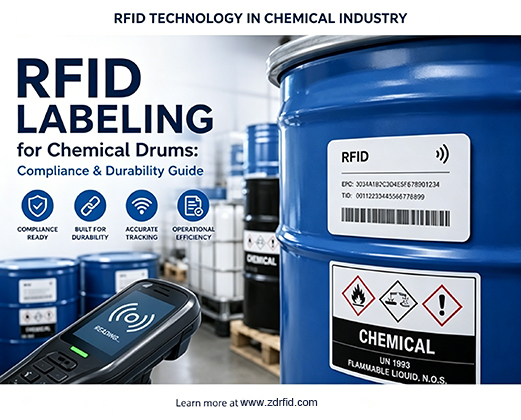
Industrial acids, solvents, and caustic alkalis easily penetrate standard paper or low-grade plastic facestocks. Once these chemicals reach the underlying adhesive layer, they dissolve the polymer bonds, causing the label to curl, peel, or completely detach during transit.
When standard passive labels are applied directly to steel or stainless steel barrels, the conductive metal surfaces reflect and absorb radio frequency energy. This electromagnetic interference detunes the internal antenna, rendering the tag unreadable to standard scanning equipment.
Digital asset tracking must work in tandem with physical safety warnings. Utilizing standard labels that fail to integrate mandated GHS pictograms, lot numbers, or legible safety data sheets means the container instantly violates global workplace hazard communication protocols.
International maritime regulations mandate that hazardous container labels withstand three months of saltwater immersion. To ensure uninterrupted traceability, the internal transponders within your NFC/HF Labels must be completely shielded by marine-grade facestocks to prevent moisture ingress and antenna deluning.
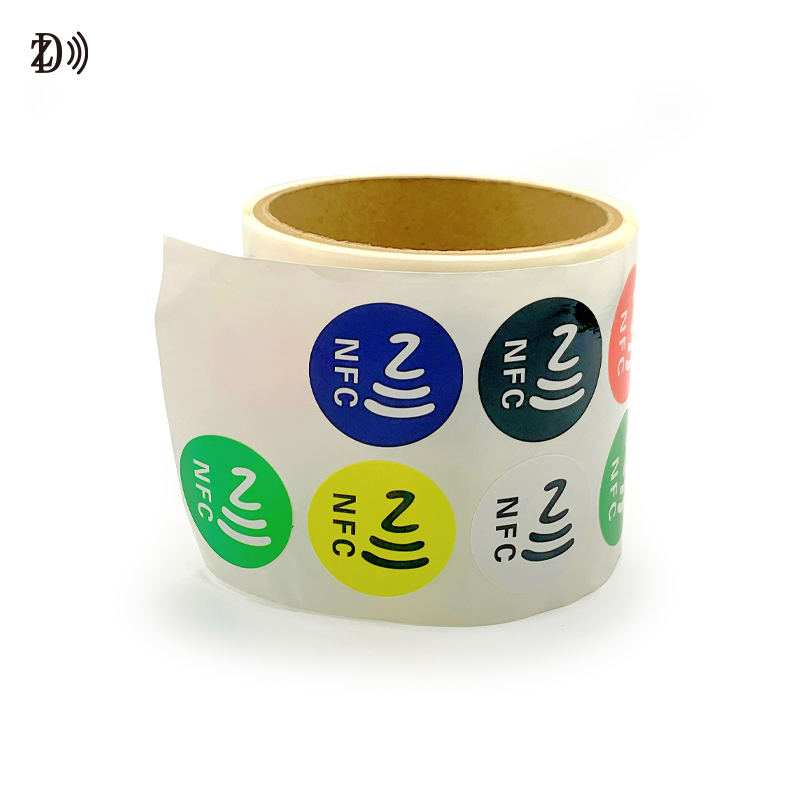
Modern B2B supply chains demand verifiable, digitized chemical data sheets. Integrating passive smart labels enables automated tracking of raw materials from manufacturing to disposal, providing the precise digital audit trails required during strict regional safety inspections.
Operating in volatile environments with flammable vapors requires hardware that eliminates spark risks. Because passive RFID transponders lack internal power sources and function entirely on harvested radio frequency energy, they are inherently suited for explosive storage zones.
Surviving accidental chemical spills requires durable outer films. Synthetic materials like high-grade Polyester (PET) or Polyimide protect the fragile aluminum inlay from oxidation and corrosive contact, ensuring the internal circuit remains intact throughout its operational lifecycle.
Chemical containers present challenging bonding surfaces, from low-surface-energy HDPE plastics to coated steel. Deploying high-shear acrylic adhesives prevents edge-lifting when containers are subjected to rough handling, friction, or outdoor weathering on open inventory racks.
Industrial tracking components must endure extreme environments. Validated tag architectures should carry high ingress protection ratings like IP68, proving they can withstand both high-pressure chemical washdowns and severe thermal fluctuations ranging from –40°C to +85°C.
Plastic substrates allow RF signals to pass through unimpeded, optimizing your read ranges. For these containers, deploying surface-optimized UHF Labels laminated with protective chemical-proof films ensures reliable, long-distance scanning across dense warehouse racks without signal distortion.
Conductive metal surfaces cause severe signal cancellation and frequency shifting. To overcome this, you should utilize thin, foam-isolated Flexible UHF Labels engineered to curve along metal walls. These specialized layers shield the antenna, allowing the tags to function perfectly on metallic barrels.
High-value assets face multi-year lifecycles, heavy mechanical impacts, and high-pressure chemical washdowns. Hard-cased configurations like encapsulated ABS Tags or rigid PCB Tags are riveted directly to the frames, delivering a permanent digital identity that outlasts hundreds of refilling cycles.
Achieving flawless tracking requires clean, oil-free container surfaces. For optimal data capture, pair your chemical-resistant labels with high-gain Antennas and rugged Handheld Readers to reliably penetrate metal-rich, high-density warehouse environments.
Balancing GHS compliance with raw durability is essential for hazardous asset tracking. Upgrade your industrial workflow with substrate-matched solutions today. Contact us at ZD_RFID for technical consultations or sample kits.
Do you need a professional team to provide you with solutions? Contact us for a quote
Let us discuss it with you.


 Tel: +86-755-23080267
 Email: [email protected]
Add: A316,building A, Huayuan Technology And Innovation Park, Baoyuan Road
Copyright © 2024 Shenzhen ZD Technology Co., Ltd., All rights reserved.
Designed by 

