
A Proximity Key Fob is a compact, contactless device that plays a crucial role in RFID (Radio-Frequency Identification) access control systems. It is extensively used in various scenarios such as offices, residential buildings, hotels, gyms, and vehicles. Leveraging either RFID or NFC (Near Field Communication) technology, this fob enables users to unlock doors or activate corresponding systems with utmost ease—simply by tapping or holding the fob near a compatible reader. Gone are the days of fumbling with mechanical keys; this contactless operation streamlines the access process significantly.
One of the key reasons behind the widespread adoption of proximity key fobs is their impressive set of advantages. They are low-cost, ensuring they are accessible for both small-scale and large-scale applications. Durability is another standout feature, as they can withstand hundreds of thousands of reads, guaranteeing a long service life. In terms of security, they offer a reliable barrier against unauthorized access. Additionally, their convenience is unmatched—they do not require batteries, eliminating the hassle of frequent battery replacements, and their small size allows for easy carrying by attaching them to a lanyard, keyring, or badge holder. These attributes collectively make them one of the most popular choices in modern access control systems.
Businesses and property managers are increasingly turning to RFID key fobs, and this trend can be attributed to the following compelling reasons:
• Fast and contactless entry: In today's fast-paced world, time is of the essence. Proximity key fobs enable quick access without the need for physical contact, reducing waiting times and improving the overall user experience. Whether it's employees rushing to start their workday or residents returning home after a long day, this feature saves valuable time.
• High-security encryption (depending on chip type): Security is a top priority for any access control system. Many proximity key fobs come with high-security encryption technology, which varies based on the chip type used. This encryption makes it extremely difficult for unauthorized individuals to replicate or hack the fob, ensuring the safety of the premises or assets being protected.
• Cost-effective for large-scale systems: For organizations that require access control for a large number of users, such as large corporations or residential complexes with hundreds of units, proximity key fobs offer a cost-effective solution. Their low unit cost, when multiplied by a large quantity, results in significant cost savings compared to other access control methods.
• Easy to program, clone, or deactivate: Flexibility is another advantage of these fobs. They can be easily programmed to grant access to specific areas or systems, making it simple to manage user permissions. In cases where a fob is lost or a user no longer requires access, it can be quickly deactivated to prevent unauthorized use. Additionally, cloning (under proper authorization) is possible, which is useful when additional fobs are needed for existing users.
• Compatible with most RFID door access systems: Interoperability is a key factor in the adoption of any technology. Proximity key fobs are designed to be compatible with the majority of RFID door access systems available in the market. This means that organizations do not have to invest in entirely new infrastructure when switching to or expanding their access control system, reducing both cost and implementation time.
Whether it's for apartments, office buildings, hotels, or parking lots, proximity key fobs provide a more modern and secure alternative to conventional keys. They eliminate the risks associated with lost or stolen keys, such as unauthorized key duplication, and offer a more convenient and efficient access management solution.
The market offers a wide range of RFID proximity key fobs, each crafted from different materials and designed to meet specific environmental requirements or branding needs. Below are the most common types, along with their unique features and applications:
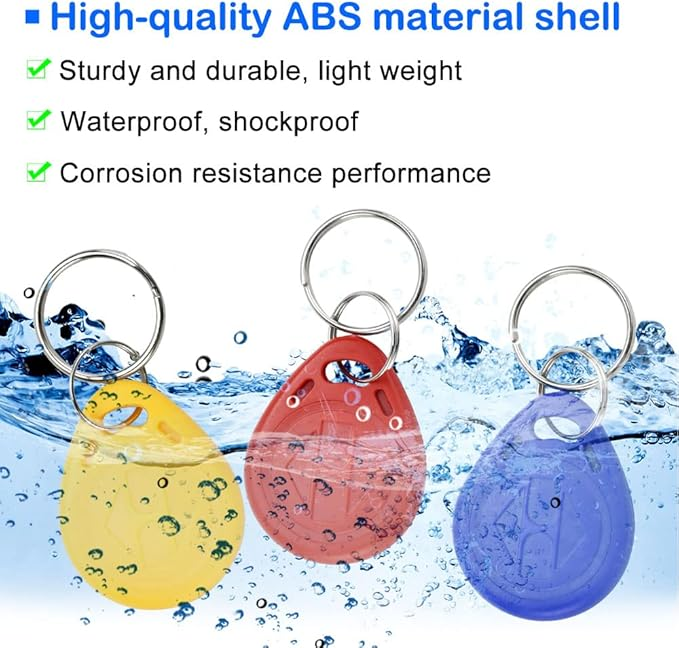
The ABS RFID key fob is the most widely used type in community access control and office buildings. Its popularity stems from its excellent combination of performance and affordability.
Features:
• Material: Constructed from durable ABS plastic, which is known for its high impact resistance and toughness. This material ensures that the fob can withstand daily wear and tear, such as accidental drops or scratches, without being easily damaged.
• Cost and durability: It is affordable, making it a cost-effective choice for large-scale deployments. At the same time, its durability ensures a long service life, reducing the need for frequent replacements.
• Chip compatibility: Supports 125kHz chips, including popular models like EM4200, TK4100, EM4305, and T5577. For users who require NFC functionality, 13.56MHz NFC chips are also available as an option.
• Customization options: Available in various shapes, sizes, and colors. This allows organizations to choose a design that aligns with their branding or specific aesthetic preferences.
This type of fob is ideal for environments that require a cost-effective and reliable RFID access system, such as residential communities, small to medium-sized offices, and schools.
Epoxy key fobs stand out with their crystal-clear, glossy finish, which is achieved through a specialized resin coating process. This gives them a premium and attractive appearance, making them a popular choice for brands that want to make a statement.
Benefits:
• Aesthetic appeal: The crystal-clear, glossy finish gives the fob a high-end look that is sure to catch the eye. It adds a touch of elegance and sophistication, making it suitable for applications where appearance matters.
• Customization capabilities: Offers full-color printing and the ability to create custom designs. This means that organizations can print their logos, brand names, or any other desired graphics on the fob, effectively turning it into a marketing tool. It is often used for membership management, events, and brand promotions, as it helps to increase brand visibility.
• Functional accessory: Beyond its access control function, it serves as a stylish accessory for keychains or bags. Users are more likely to keep and use a fob that is visually appealing and complements their personal style.
These fobs perfectly combine function and aesthetics, making them an excellent choice for companies that value branding and want to leave a lasting impression on their customers or members.
Do you need a professional team to provide you with solutions? Contact us for a quote
Let us discuss it with you.


 Tel: +86-755-23080267
 Email: [email protected]
Add: A316,building A, Huayuan Technology And Innovation Park, Baoyuan Road
Copyright © 2024 Shenzhen ZD Technology Co., Ltd., All rights reserved.
Designed by 

